Videos -Hurones y pulpo de peluche-
Published Tuesday, October 02, 2007 by Spyder.
El hurón es un animal que cada vez más tiene su hueco entre los animales domésticos de nuestras casas. Quizás no es tan popular aquí como en los Estados Unidos, pero al menos ya ha dejado de ser considerado en la mentalidad popular como un animal exótico. El hurón es un animal bastante inteligente y juguetón, cuyo máximo inconveniente es que son incapaces de estarse quietos; son muy traviesos y les encanta investigar todos los rincones de las casas.
En el video siguiente se puede ver jugar a unos hurones alrededor de una especie de pulpo madriguera. Una escena desde luego simpática.
Videos -Pulpo ataca cámaras-
Published Thursday, September 20, 2007 by Spyder.
Este vídeo es muy explicativo de lo la capacidad que tiene un pulpo para aplicar sus tentáculos para agarrarse a cualquier cosa. Es divertido oír al cámara casi suplicando: "¡suelta la cámara, c...!"
El afortunado de la cámara es un tal Marco Panero, que tiene entre sus otros videos colgados alguna que otra creación, no se hasta que punto digna de mención, pero bueno, aquí estamos para eso, para nombrar lo innombrable. Miren aquí al Monito del culito en Egipto, un mono azulado que me hace recordar al gnomo viajero de la película Amelie.
Octopuses -Master Escape Artists(II).
Published Thursday, September 13, 2007 by Spyder.
"Pero hay más: estos invertebrados tienen tal grado de inteligencia que son un problema en muchos acuarios. Existe incluso el caso en el que pequeños peces y cangrejos desaparecían durante días en tanques en los que no había depredadores. Finalmente se descubrió el responsable: un pulpo que, cada noche, salía de su tanque y se arrastraba hasta el otro tanque fuera del agua, a continuación se daba un festín con las pequeñas criaturas y, antes de la mañana, volvía a arrastrarse por el suelo hasta su propio hogar. (Durante un tiempo, se sospechó que empleados del acuario estaban robando o matando a las víctimas)."
Extraigo este texto de la página web de El tamiz. Aunque como ya hemos hablado varias veces es cierto lo de los pulpos escapistas, esta historia de un pulpo escapista depredador no la había oído nunca. Un pulpo que sale de noche de un tanque a otro y después de alimentarse vuelve a su tanque original. No sé lo que opinaréis vosotros pero a mí el asunto me suena a leyenda urbana. Tendré que investigar y reunir pruebas...
Labels: Comportamiento, Humor
Noticia -Peorian finds octopus in his toilet-
Published Wednesday, June 06, 2007 by Spyder.
La noticia es antigua, pero creo que vale la pena recordarla para orientar un poco el cómo ocurren muchos de esos misterios aparentemente inexplicables que luego alimentan leyendas urbanas.
Una mujer estadounidense puso un pequeño pulpo en el water de su novio. Cuando este llegó a casa fue hacia el lavabo y encontró al pulpo. Se imaginó que éste debía haberse escapado de las alcantarillas. Llamó al periódico local, y el misterio se fue retroalimentando. La noticia salió en los periódicos y televisiones locales bautizada como el Gran misterio del pulpo. Todo acabó cuando la chica arrepentida de las repercusiones que estaban produciéndose por su broma, llamó a su novio y le confesó que ella había sido la autora de todo.
Peorian finds octopus in his toilet
Origin of tentacled mollusk a mystery: 'I know they don't live in the river'
November 20, 2003
By LESLIE WILLIAMS
of the Journal Star
Origin of tentacled mollusk a mystery: 'I know they don't live in the river'
November 20, 2003
By LESLIE WILLIAMS
of the Journal Star
PEORIA - Chad Allen will never look at the toilet in his North Peoria home the same way again.
That's after he says he discovered a tiny octopus on the inside of it Wednesday afternoon.
"I looked over and saw something," said Allen, 31, of 634 W. Mount Hawley Terrace. "I thought it was a paper towel."
Instead, he found the dark brown mollusk with a head about the size of a quarter and eight sucker-covered tentacles several inches long.
"I couldn't believe it," Allen said. "It wasn't in the toilet water. It was resting on the side of the bowl."
He fetched a wooden spatula from the kitchen and gave the octopus a poke.
"It was dead."
Allen insisted the saltwater creature was not his and guessed somebody had flushed the octopus down the toilet after it died in an aquarium.
"I know they don't live in the river," he said.
An employee in the fish room at Super Pets, 910 W. Lake Ave., who asked to remain anonymous, said an octopus wouldn't last more than an hour in fresh water.
"They're pretty sensitive to changes," he said.
The employee said the pet store sometimes carries small octopuses, but it hasn't in a few months because they are hard to acquire.
"It's odd that (an octopus) can get backed up in the sewer system like that," Allen said. "The chances of it happening are so slim."
Stan Browning, executive director for the Greater Peoria Sanitary District, agreed.
"It's very unlikely something like that would happen," he said. "It's not impossible. It's extremely unlikely."
Plumber James Dillon, who's also mayor of West Peoria, found the toilet tale hard to believe.
"That's a first," he said. "I've never heard of it."
Dillon said if the octopus was flushed, it must have been by someone living near Allen's residence.
"It's wild that something like that would happen," he said. "Peoria has one of the best sewer systems in Illinois. All of the sewers are sealed."
Dillon added, however, there is nothing in the sewer system that would block an object the size of the octopus from coming up plumbing.
Browning said the only way an octopus would have gotten into the sewer system is if a pet owner flushed the creature down the toilet.
"We don't find exotic animals like that in the sewage," Browning said.
"The odds are really slim … that it traveled … up a pipe and into someone's toilet. It would move in the pipe the same direction the water is moving. It would move like any other sewage solid."
To make sure that no other Peorian finds a surprise in their toilet, Allen said he planned to throw the octopus into the garbage.
"I don't want it to wind back up in someone else's toilet," he said.
"I looked over and saw something," said Allen, 31, of 634 W. Mount Hawley Terrace. "I thought it was a paper towel."
Instead, he found the dark brown mollusk with a head about the size of a quarter and eight sucker-covered tentacles several inches long.
"I couldn't believe it," Allen said. "It wasn't in the toilet water. It was resting on the side of the bowl."
He fetched a wooden spatula from the kitchen and gave the octopus a poke.
"It was dead."
Allen insisted the saltwater creature was not his and guessed somebody had flushed the octopus down the toilet after it died in an aquarium.
"I know they don't live in the river," he said.
An employee in the fish room at Super Pets, 910 W. Lake Ave., who asked to remain anonymous, said an octopus wouldn't last more than an hour in fresh water.
"They're pretty sensitive to changes," he said.
The employee said the pet store sometimes carries small octopuses, but it hasn't in a few months because they are hard to acquire.
"It's odd that (an octopus) can get backed up in the sewer system like that," Allen said. "The chances of it happening are so slim."
Stan Browning, executive director for the Greater Peoria Sanitary District, agreed.
"It's very unlikely something like that would happen," he said. "It's not impossible. It's extremely unlikely."
Plumber James Dillon, who's also mayor of West Peoria, found the toilet tale hard to believe.
"That's a first," he said. "I've never heard of it."
Dillon said if the octopus was flushed, it must have been by someone living near Allen's residence.
"It's wild that something like that would happen," he said. "Peoria has one of the best sewer systems in Illinois. All of the sewers are sealed."
Dillon added, however, there is nothing in the sewer system that would block an object the size of the octopus from coming up plumbing.
Browning said the only way an octopus would have gotten into the sewer system is if a pet owner flushed the creature down the toilet.
"We don't find exotic animals like that in the sewage," Browning said.
"The odds are really slim … that it traveled … up a pipe and into someone's toilet. It would move in the pipe the same direction the water is moving. It would move like any other sewage solid."
To make sure that no other Peorian finds a surprise in their toilet, Allen said he planned to throw the octopus into the garbage.
"I don't want it to wind back up in someone else's toilet," he said.
Humor -La tinta de los pulpos-
Published Tuesday, April 03, 2007 by Spyder.
Texto de la Uncyclopedia que viene a ser una especie de whiskypedia muy divertida. Se relata toda la historia de los pulpos vínculada a la producción de tinta. Los pulpos muy apreciados por su producción de tinta fueron utilizados como monedas, hasta llegar al punto que casi se llega a su extinción. Esta presión sobre la tinta del pulpo, se aligeró cuando salieron otros métodos de escritura.
El texto tiene algunos puntos bastante cómicos y segurmante también tiene más profundidad de lo que aparenta, pues muchos de los datos se apoyan en una base real, por ejemplo el hecho de que la tinta del pulpo fuera utilizada para la escritura, e incluso que en algunos lugares los pulpos fueran utilizados como monedas de cambio.
Ink
Ink is a liquid with a strong color used for writing and printing.
Origin
Ink was traditionally extracted from octopuses, who use it to camouflage their nests, feed their young and annoy people who snorkel. The importance of ink in an increasingly literate society made the octopuses highly valuable, and they were even used as currency in some parts of the world, most notably Japan. Large octopus farms were constructed to handle the ever-increasing demand, and many families living by lakes, rivers or the sea kept an octopus as a pet to remain self-sufficient in times of war.
Ink is a liquid with a strong color used for writing and printing.
Origin
Ink was traditionally extracted from octopuses, who use it to camouflage their nests, feed their young and annoy people who snorkel. The importance of ink in an increasingly literate society made the octopuses highly valuable, and they were even used as currency in some parts of the world, most notably Japan. Large octopus farms were constructed to handle the ever-increasing demand, and many families living by lakes, rivers or the sea kept an octopus as a pet to remain self-sufficient in times of war.
The Ink Scare of the 1740s
The octopuses (also known as octopi or fat squids) struggled to adapt to their new role. The constant milking for ink made them unable to properly conceal their young from predators, and by the early 1740s they were on the brink of extinction. The black gold dwindled ever faster.
Not much is known of this period, since few people were willing to spend ink documenting it. The acute need for ink led to the invention of alternative sources, including a synthetic ink known as soy sauce containing equal parts of water, corn starch and darkness, and the pencil, facilitating ink-less writing for the first time since the chisel.
The pencil won out for hand writing, due to its low cost and chewy graphite. Soy sauce was reserved for formal letter-writing and masking the taste of bad fish.
The octopuses (also known as octopi or fat squids) struggled to adapt to their new role. The constant milking for ink made them unable to properly conceal their young from predators, and by the early 1740s they were on the brink of extinction. The black gold dwindled ever faster.
Not much is known of this period, since few people were willing to spend ink documenting it. The acute need for ink led to the invention of alternative sources, including a synthetic ink known as soy sauce containing equal parts of water, corn starch and darkness, and the pencil, facilitating ink-less writing for the first time since the chisel.
The pencil won out for hand writing, due to its low cost and chewy graphite. Soy sauce was reserved for formal letter-writing and masking the taste of bad fish.
Labels: Humor
Sombrero pulpero -Los mil usos del pulpo-
Published Sunday, January 28, 2007 by Spyder.

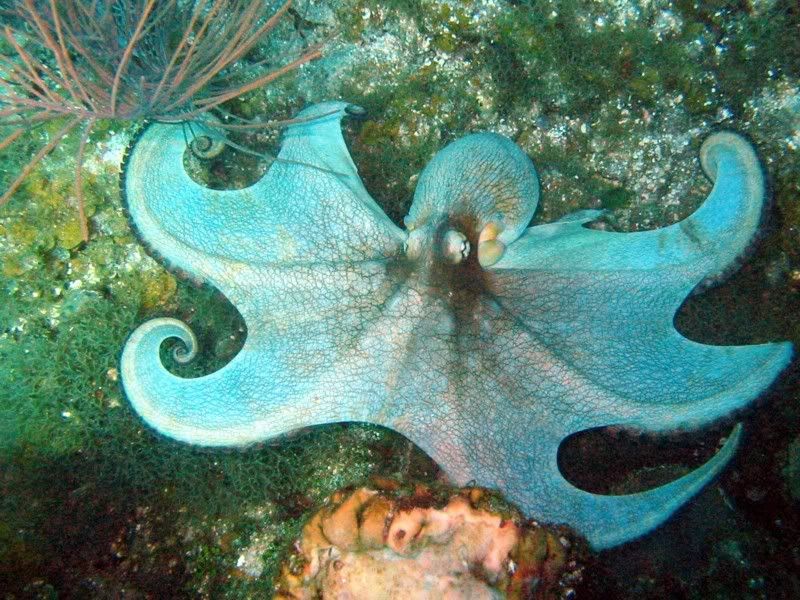
Es una pena que al rey no le guste enviar felicitaciones de Navidad con un pulpo como sombrero, porque este descubrimiento me habría aupado en niveles de audiencia estratosféricos.
La segunda foto está tomada por el fotógrafo Adam Laverty en los arrecifes del Caribe, la primera es una ilustración del dúo Kozyndan del que ya hablamos aquí.
Ahora un problema para avanzados: intente ver en el sombrero pulpero a una boa comiéndose un elefante.
PD. Photobucket me había censurado la imagen de Kozyndan y he tenido que retocar este post para alojar la imagen directamente desde blogger. No sé si censura por un programa o lo hacen visualmente mediante censores. Pero considero que estas censuras van en contra del arte. Sí, ya sé que se ven dos pechos desnudos, pero el semidesnudo me parece bastante inocente, ¿no creen?. Si el criterio censor que utiliza photobucket se extendiera a los Museos de arte, la mayoría de las salas estarían cerradas.
Humor -Day after the Day of the Tentacle-
Published Saturday, January 27, 2007 by Spyder.
Tiras cómicas que han salido del juego Day of the Tentacle, aunque en este caso las que cuelgo están en castellano gracias a Tomás Maidagan, que se ve que le va esto de charnegar los juegos de ordenador. Las originales se pueden visitar en esta otra página web.


Las tiras cómicas en este caso llevan el nombre de Day after the Day of the Tentacle, y parte de la base que los personajes Bernard, Hoagie y Laverne están todos viviendo en el Hotel Edison con Dr. Edison.
No lo había mencionado hasta ahora, pero creo que hay una clara referencia en la figura del Tentáculo con la pareja de extraterrestres que visitan al Calvin de la tira cómica Calvin &Hobbes.
Las tiras cómicas en este caso llevan el nombre de Day after the Day of the Tentacle, y parte de la base que los personajes Bernard, Hoagie y Laverne están todos viviendo en el Hotel Edison con Dr. Edison.
No lo había mencionado hasta ahora, pero creo que hay una clara referencia en la figura del Tentáculo con la pareja de extraterrestres que visitan al Calvin de la tira cómica Calvin &Hobbes.
Noticia -Cazado un estafador pulpero-
Published Tuesday, December 26, 2006 by Spyder.
Esta noticia tiene miga, o tiene pulpo -según se mire-, un timador que vendía relojes por internet, y tras la compra enviaba latas de pulpo al ajillo...
Sin duda el sentido del humor debería funcionar como atenuante...
Esta es la única referencia que he encontrado por internet:
DETENIDO UN INDIVIDUO EN BARCELONA QUE VENDIA RELOJES Y EN SU LUGAR ENVIABA LATAS DE PULPO
(Fuente: agencias)
Un vecino de Ponferrada presentó una denuncia en la Comisaría de Policía de esta localidad leonesa por presunta estafa cometida por un vecino de Castellbisbal(Barcelona) que se dedicaba a la venta de productos a través de Internet, concretamente relojes, aunque en su lugar mandaba latas de pulpo al ajillo.
Las estafas fueron registradas en Madrid, Salamanca, Córdoba, Villagarcía de Arosa (Pontevedra) y Lorca(Granada).
Según los datos facilitados por fuentes policiales, el vendedor se dedicaba a estafar a sus clientes a través de la venta de réplicas de relojes de diversas marcas cuyo precio oscilaba entre las 40.000 y las 65.000 pesetas, aunque los compradores recibían a traves de una empresa de mensajería una lata de pulpo al ajillo.
Los agentes de Ponferrada se pusieron en contacto con la Comisaría de San Boi de
Llobregat (Barcelona) y se procedió a vigilar a la citada empreas de paquetería, de la que procedían los envíos y donde se cobraban los reembolsos.
Fue así como se detuvo a F.R.G, de 28 años, con domicilio en Rubí (Barcelona). Como consecuencia de la denuncia hecha en Ponferrada, se logró esclarecer otras seis
estafas similares, cometidas por el mismo individuo. El caso lo está llevando el Juzgado de Instrucción número 2 de Ponferrada y el Juzgado de guardia de Martorell, en Cataluña.
Sin duda el sentido del humor debería funcionar como atenuante...
Esta es la única referencia que he encontrado por internet:
DETENIDO UN INDIVIDUO EN BARCELONA QUE VENDIA RELOJES Y EN SU LUGAR ENVIABA LATAS DE PULPO
(Fuente: agencias)
Un vecino de Ponferrada presentó una denuncia en la Comisaría de Policía de esta localidad leonesa por presunta estafa cometida por un vecino de Castellbisbal(Barcelona) que se dedicaba a la venta de productos a través de Internet, concretamente relojes, aunque en su lugar mandaba latas de pulpo al ajillo.
Las estafas fueron registradas en Madrid, Salamanca, Córdoba, Villagarcía de Arosa (Pontevedra) y Lorca(Granada).
Según los datos facilitados por fuentes policiales, el vendedor se dedicaba a estafar a sus clientes a través de la venta de réplicas de relojes de diversas marcas cuyo precio oscilaba entre las 40.000 y las 65.000 pesetas, aunque los compradores recibían a traves de una empresa de mensajería una lata de pulpo al ajillo.
Los agentes de Ponferrada se pusieron en contacto con la Comisaría de San Boi de
Llobregat (Barcelona) y se procedió a vigilar a la citada empreas de paquetería, de la que procedían los envíos y donde se cobraban los reembolsos.
Fue así como se detuvo a F.R.G, de 28 años, con domicilio en Rubí (Barcelona). Como consecuencia de la denuncia hecha en Ponferrada, se logró esclarecer otras seis
estafas similares, cometidas por el mismo individuo. El caso lo está llevando el Juzgado de Instrucción número 2 de Ponferrada y el Juzgado de guardia de Martorell, en Cataluña.
Labels: Curiosidades, Humor, Noticias
Curiosidades -Pulpos en el estómago (II)-
Published Thursday, December 14, 2006 by Spyder.
El texto que colgué hace un par de dias era uno de esos temidos hoax que uno recibe de vez en cuando por correo, aunque en este caso esta leyenda urbana no se haya extendido por España, si lo ha hecho por paises de habla inglesa. Evidentemente es totalmente falso, ¡a menos que alguien me lo rebata! Dudo mucho que unas huevas de pulpo puedan eclosionar y vivir entre los jugos gástricos. Supongo que la confusión viene un poco por párasitos como la solitaria (tenia), que si que son capaces de sobrevivir en el intestino, y creo que si pasan en su proceso de huevos por el estómago. Pero es evidente que el habitat en el que vive este organismo es totalmente distinto al que necesitaría un pulpo.
De todas maneras pongo un texto donde da algunas referencias al respecto de Snopes(un lugar de habla inglesa que hace recopilación de hoaxes). Otro lugar del estilo es el Museum of Hoaxes.
Origins
In his 1948 book The Affairs of Dame Rumor, Jacobson mentions this rumor "flooded the Atlantic states in 1934" and notes the story had been published in the Boston Traveler a few years earlier. Fishbein's 1930 book Shattering Health Superstitions includes the text of the Traveler piece:

A London factory girl is reported to have swallowed something while taking a swim, and immediately after was seized with terrible pains. A local doctor and a specialist both failed to diagnose the case, but an X-ray examination finally showed that she had swallowed an octopus egg, which had hatched out inside her anatomy.
Folklorist Jan Brunvand points out there is a traditional folk motif assigned to this type of tale: B784.1.4 — Girl swallows frog spawn; an octopus grows inside her with tentacles reaching to every part of her body. How an octopus can grow from frog spawn remains unexplained, however.
There are numerous versions of the basic legend:
• Octopus grows inside girl who swallowed an octopus egg while swimming in the ocean.
• Fish grows inside man who swallowed a fish egg when he was a boy, either while swimming in a stream or by drinking spring water.
• Snake grows inside girl who ingested a snake egg by drinking from the garden hose.
• Lizard is coughed up by woman who unknowingly acquired it by drinking water.
All of these tales might be considered variations of the "bosom serpent" legend, described by Harold Schecter as a tale in which "through some unfortunate circumstance or act of carelessness . . . a snake. . . is accidentally ingested by, or grows inside the body of, the unlucky individual, where it remains until it is expelled or in some way lured out of the victim's body." This motif remains popular in films such as Alien, which features a crew member "impregnated" by an alien creature; once the incubation period is complete, the alien lifeform is "born" by bursting out through his chest. As Schechter notes, "like the traditional, oral versions that have been popular for hundreds of years, [the] only purpose [of the birth scene in Alien] is to produce emotional response: shock, revulsion, morbid fascination."
In June 2004 the Iranian daily Etemaad reported that an unnamed woman from the south-eastern city of Iranshahr had given birth to a frog. According to that paper, the woman's gynaecologist confirmed that the lady in question, whose period had stopped for six months, had undergone sonography in May which showed she had a cyst in her abdomen and that following severe bleeding, she gave birth to a live grey frog accompanied with mud.
Numerous news outlets subsequently carried the story, but in the manner of reporting that an Iranian paper had run the item, not as a confirmation of the facts of the account.
If the photo of the frog (as initially provided by the BBC — it was later stripped from their online article and replaced by a map of Iraq) was accurate, it disproved the theory that the purported mother of Kermit came by her amphibian pregnancy through having swum in or drunk frog spawn, because the lily pad jumper so pictured was of a species not native to Iran.
In any event, it was always a case of news outlets repeating a weird story that had come to them, not of vetting the tale's claims. Humans cannot give birth to frogs, or snakes, or fish, or lizards, or octopuses — our biology rules it out.
De todas maneras pongo un texto donde da algunas referencias al respecto de Snopes(un lugar de habla inglesa que hace recopilación de hoaxes). Otro lugar del estilo es el Museum of Hoaxes.
Origins
In his 1948 book The Affairs of Dame Rumor, Jacobson mentions this rumor "flooded the Atlantic states in 1934" and notes the story had been published in the Boston Traveler a few years earlier. Fishbein's 1930 book Shattering Health Superstitions includes the text of the Traveler piece:

A London factory girl is reported to have swallowed something while taking a swim, and immediately after was seized with terrible pains. A local doctor and a specialist both failed to diagnose the case, but an X-ray examination finally showed that she had swallowed an octopus egg, which had hatched out inside her anatomy.
Folklorist Jan Brunvand points out there is a traditional folk motif assigned to this type of tale: B784.1.4 — Girl swallows frog spawn; an octopus grows inside her with tentacles reaching to every part of her body. How an octopus can grow from frog spawn remains unexplained, however.
There are numerous versions of the basic legend:
• Octopus grows inside girl who swallowed an octopus egg while swimming in the ocean.
• Fish grows inside man who swallowed a fish egg when he was a boy, either while swimming in a stream or by drinking spring water.
• Snake grows inside girl who ingested a snake egg by drinking from the garden hose.
• Lizard is coughed up by woman who unknowingly acquired it by drinking water.
All of these tales might be considered variations of the "bosom serpent" legend, described by Harold Schecter as a tale in which "through some unfortunate circumstance or act of carelessness . . . a snake. . . is accidentally ingested by, or grows inside the body of, the unlucky individual, where it remains until it is expelled or in some way lured out of the victim's body." This motif remains popular in films such as Alien, which features a crew member "impregnated" by an alien creature; once the incubation period is complete, the alien lifeform is "born" by bursting out through his chest. As Schechter notes, "like the traditional, oral versions that have been popular for hundreds of years, [the] only purpose [of the birth scene in Alien] is to produce emotional response: shock, revulsion, morbid fascination."
In June 2004 the Iranian daily Etemaad reported that an unnamed woman from the south-eastern city of Iranshahr had given birth to a frog. According to that paper, the woman's gynaecologist confirmed that the lady in question, whose period had stopped for six months, had undergone sonography in May which showed she had a cyst in her abdomen and that following severe bleeding, she gave birth to a live grey frog accompanied with mud.
Numerous news outlets subsequently carried the story, but in the manner of reporting that an Iranian paper had run the item, not as a confirmation of the facts of the account.
If the photo of the frog (as initially provided by the BBC — it was later stripped from their online article and replaced by a map of Iraq) was accurate, it disproved the theory that the purported mother of Kermit came by her amphibian pregnancy through having swum in or drunk frog spawn, because the lily pad jumper so pictured was of a species not native to Iran.
In any event, it was always a case of news outlets repeating a weird story that had come to them, not of vetting the tale's claims. Humans cannot give birth to frogs, or snakes, or fish, or lizards, or octopuses — our biology rules it out.
Labels: Curiosidades, Humor
Curiosidades -Pulpos en el estómago-
Published Sunday, December 10, 2006 by Spyder.
Y siguiendo la tónica de hace unos días cuelgo este texto que acabo de traducir del inglés, y que visto con mi mirada crítica es muy cachondo. Lo explico en un par de dias, pero espero que mientras tanto no tengan pesadillas.
"Una muchacha adolescente que vivía en una ciudad costera de California, estaba aparentemente embarazada –su estómago comenzaba a hincharse, malestares por la mañana, etc-. Ella, sin embargo, llena de lágrimas, insistió a su madre que ella no podía estar embarazada, porque ella nunca “lo había hecho” con un muchacho por lo que era imposible.
Como los síntomas de embarazo persistían -su estómago continuaba creciendo, su apetito aumentaba, y así sucesivamente- su madre insistió en que ella estaba embarazada. Y la muchacha continúo negándolo.
Finalmente le hicieron unas radiografías y le dieron la razón a la chica. Ella tenía un gran tumor en el estómago y enseguida que los médicos lo advirtieron la pasaron a quirófano. Pero pasa asombro de los cirujanos no se encontraron con el diagnosticado tumor, sino con un pulpo pequeño, que vivo se había sujetado a las paredes del estómago. ¿Cómo sucedió para que esto fuera posible?
Los huevos de pulpo son de tamaño microscópico, y se ponen en racimos de decenas de millar, que son puestos sobre las algas del fondo oceánico por una secreción pegajosa. No queda más allá del reino de las posibilidades, que algunos de estos pudieran liberarse y flotar hasta la superficie donde podrían ser tragadas por un desprevenido nadador… de todas maneras no te burles, porque la chica era una amiga cercana de la novia de mi hermano."
"Una muchacha adolescente que vivía en una ciudad costera de California, estaba aparentemente embarazada –su estómago comenzaba a hincharse, malestares por la mañana, etc-. Ella, sin embargo, llena de lágrimas, insistió a su madre que ella no podía estar embarazada, porque ella nunca “lo había hecho” con un muchacho por lo que era imposible.
Como los síntomas de embarazo persistían -su estómago continuaba creciendo, su apetito aumentaba, y así sucesivamente- su madre insistió en que ella estaba embarazada. Y la muchacha continúo negándolo.
Finalmente le hicieron unas radiografías y le dieron la razón a la chica. Ella tenía un gran tumor en el estómago y enseguida que los médicos lo advirtieron la pasaron a quirófano. Pero pasa asombro de los cirujanos no se encontraron con el diagnosticado tumor, sino con un pulpo pequeño, que vivo se había sujetado a las paredes del estómago. ¿Cómo sucedió para que esto fuera posible?
Los huevos de pulpo son de tamaño microscópico, y se ponen en racimos de decenas de millar, que son puestos sobre las algas del fondo oceánico por una secreción pegajosa. No queda más allá del reino de las posibilidades, que algunos de estos pudieran liberarse y flotar hasta la superficie donde podrían ser tragadas por un desprevenido nadador… de todas maneras no te burles, porque la chica era una amiga cercana de la novia de mi hermano."
Labels: Curiosidades, Humor
Calamar gigante -Disfraz-
Published Thursday, November 16, 2006 by Spyder.
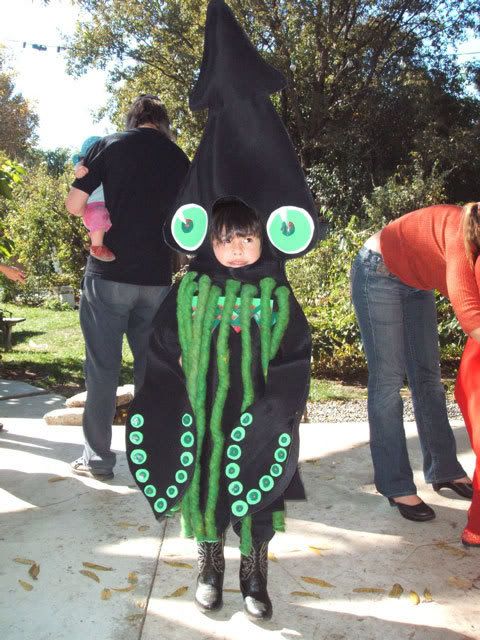
Rara especie de calamar gigante capaz de caminar sobre dos de sus tentáculos (botines para más datos). Corresponde a una de las pocas fotografías que se han podido tomar de un ejemplar vivo.
Labels: Humor, Monstruos marinos
Octopuses -Master Escape Artists-
Published Tuesday, October 24, 2006 by Spyder.
Si su pulpo se escapa por las noches, aquí le damos una solución...
Octopuses: Master Escape Artists
Lucy A. Snyder
Being such highly intelligent creatures, octopuses are master escape artists, and can be hard to keep in an aquarium if they want out. I've known a couple of people who've gotten a small octopod for their home saltwater aquarium, only to find the creature dead and dried-up on the floor after it pried off the tank lid and crawled out in the night. One acquaintance of mine found his little octopod dead of electrocution after it escaped from its tank and made the mistake of probing a socket on a nearby power strip with one of its damp tentacles.
My marine biology professor from my undergrad college once had a laboratory job where they often kept octopuses. He learned a simple technique for convincing the new octopus that, yes, it really wanted to stay put in the aquarium.
He'd put the new octopus in the tank, do some odds and ends in the lab for a few minutes, then leave the room and turn out the lights. He'd wait outside until he heard the telltale, sodden slap that mean the octopus had staged a jailbreak and had hit the floor. He'd wait one minute, then go back into the lab and put the octopus back in the tank.
He'd repeat the process, the next time waiting three minutes. And on the third time, he waited a whole five minutes before rescuing the miserable, sticky, dust-bunny-covered octopus from the lab floor, rinsing it off, and placing it back in the aquarium.
After that third time, he told me, an octopus wouldn't try to escape again. In fact, he sometimes had to work hard to get it out if it needed to be examined or transferred to a new tank so the old one could be cleaned.
Octopuses: Master Escape Artists
Lucy A. Snyder
Being such highly intelligent creatures, octopuses are master escape artists, and can be hard to keep in an aquarium if they want out. I've known a couple of people who've gotten a small octopod for their home saltwater aquarium, only to find the creature dead and dried-up on the floor after it pried off the tank lid and crawled out in the night. One acquaintance of mine found his little octopod dead of electrocution after it escaped from its tank and made the mistake of probing a socket on a nearby power strip with one of its damp tentacles.
My marine biology professor from my undergrad college once had a laboratory job where they often kept octopuses. He learned a simple technique for convincing the new octopus that, yes, it really wanted to stay put in the aquarium.
He'd put the new octopus in the tank, do some odds and ends in the lab for a few minutes, then leave the room and turn out the lights. He'd wait outside until he heard the telltale, sodden slap that mean the octopus had staged a jailbreak and had hit the floor. He'd wait one minute, then go back into the lab and put the octopus back in the tank.
He'd repeat the process, the next time waiting three minutes. And on the third time, he waited a whole five minutes before rescuing the miserable, sticky, dust-bunny-covered octopus from the lab floor, rinsing it off, and placing it back in the aquarium.
After that third time, he told me, an octopus wouldn't try to escape again. In fact, he sometimes had to work hard to get it out if it needed to be examined or transferred to a new tank so the old one could be cleaned.
Labels: Humor
Mi único tentáculo
Published Monday, October 23, 2006 by Spyder.
Mi único tentáculo...
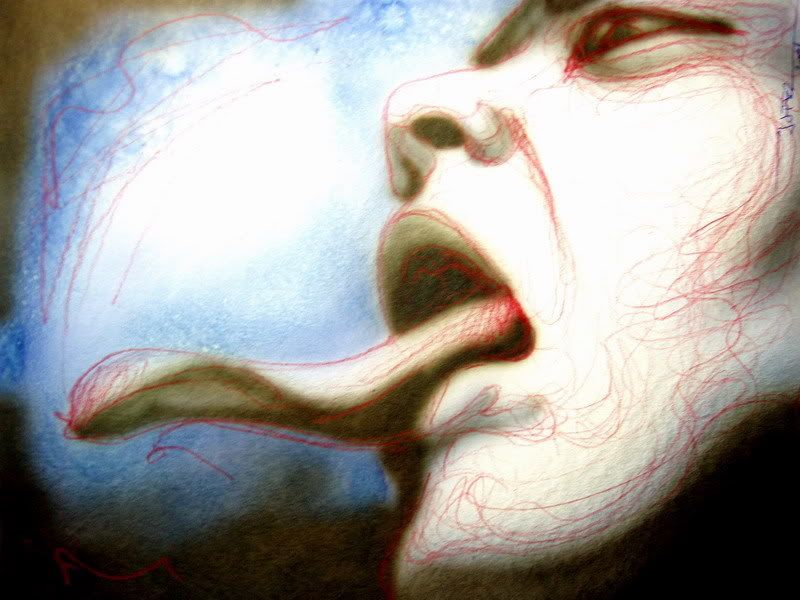
Ilustración de Juan Jesús Fernández, mediante la técnica del aerógrafo. Para más información se puede visitar su web.
J. JESÚS FEZ JIMÉNEZ
Nacido en Cádiz en 1980, España, J. Jesús se declara seguidor de Luis Royo, Hans Rüdi Giger y heredero del movimiento expresionista alemán (Käthe Kollwitz, Blaue Reiter o die Brücke).
B. Wrightson, Ashley Wood y Chichoni se cuentan entre sus influencias más directas. Se decanta por el aerógrafo, pero también hace amplio uso de óleo, lápiz y tinta, amén del inevitable ordenador. Estudió en la Facultad de Bellas Artes de Sevilla, ha recibido varios premios y participado en multitud de exposiciones por toda Andalucía y parte del extranjero. En la actualidad vive en Alemania.
B. Wrightson, Ashley Wood y Chichoni se cuentan entre sus influencias más directas. Se decanta por el aerógrafo, pero también hace amplio uso de óleo, lápiz y tinta, amén del inevitable ordenador. Estudió en la Facultad de Bellas Artes de Sevilla, ha recibido varios premios y participado en multitud de exposiciones por toda Andalucía y parte del extranjero. En la actualidad vive en Alemania.
Labels: Humor
Help Save The Tree Octopus From Extinction
Published Wednesday, October 18, 2006 by Spyder.
La respiración del pulpo se produce a través de unas branquias interiores, pero no es imposible que un pulpo pueda dejar el agua por un breve periodo. Se cuentan historias de pulpos que han intentado escapar un acuario próximo para invadir otro por la presencia de pescados. No lo tengo confirmado... pero juro que lo he leido.
¿Pero que me dirían de pulpos que vivieran fuera del agua? ¿Oyeron alguna vez hablar de los Pulpos árbol? Una especie que sólo vive en el mar en sus años jóvenes, mientras que posteriormente puede vivir acumulando la humedad de los bosques.
Pues bien voy a dejar un artículo sobre ellos muy divertido, pero antes de liarles con este pulpo anfibio, les desvelo que todo es una inmensa broma que ha llenado páginas y páginas de internet. Así que mi consejo es que no vayan a los bosques a intentar pescar alguno...
¿Pero que me dirían de pulpos que vivieran fuera del agua? ¿Oyeron alguna vez hablar de los Pulpos árbol? Una especie que sólo vive en el mar en sus años jóvenes, mientras que posteriormente puede vivir acumulando la humedad de los bosques.
Pues bien voy a dejar un artículo sobre ellos muy divertido, pero antes de liarles con este pulpo anfibio, les desvelo que todo es una inmensa broma que ha llenado páginas y páginas de internet. Así que mi consejo es que no vayan a los bosques a intentar pescar alguno...
The Pacific Northwest Tree Octopus
(Endangered)
Help Save The Tree Octopus From Extinction!
About The Pacific Northwest Tree Octopus
 The Pacific Northwest tree octopus (Octopus paxarbolis) can be found in the temperate rainforests of the Olympic Peninsula on the west coast of North America. Their habitat lies on the Eastern side of the Olympic mountain range, adjacent to Hood Canal. These solitary cephalopods reach an average size (measured from arm-tip to mantle-tip,) of 30-33 cm. Unlike most other cephalopods, tree octopuses are amphibious, spending only their early life and the period of their mating season in their ancestral aquatic environment. Because of the moistness of the rainforests and specialized skin adaptations, they are able to keep from becoming desiccated for prolonged periods of time, but given the chance they would prefer resting in pooled water.
An intelligent and inquisitive being (it has the largest brain-to-body ratio for any mollusk), the tree octopus explores its arboreal world by both touch and sight. Adaptations its ancestors originally evolved in the three dimensional environment of the sea have been put to good use in the spatially complex maze of the coniferous Olympic rainforests. The challenges and richness of this environment (and the intimate way in which it interacts with it,) may account for the tree octopus's advanced behavioral development. (Some evolutionary theorists suppose that "arboreal adaptation" is what laid the groundwork in primates for the evolution of the human mind.)
Reaching out with one of her eight arms, each covered in sensitive suckers, a tree octopus might grab a branch to pull herself along in a form of locomotion called tentaculation; or she might be preparing to strike at an insect or small vertebrate, such as a frog or rodent, or steal an egg from a bird's nest; or she might even be examining some object that caught her fancy, instinctively desiring to manipulate it with her dexterous limbs (really deserving the title "sensory organs" more than mere "limbs",) in order to better know it.
Tree octopuses have eyesight comparable to humans. Besides allowing them to see their prey and environment, it helps them in inter-octopus relations. Although they are not social animals like us, they display to one-another their emotions through their ability to change the color of their skin: red indicates anger, white fear, while they normally maintain a mottled brown tone to blend in with the background.
The reproductive cycle of the tree octopus is still linked to its roots in the waters of the Puget Sound from where it is thought to have originated. Every year, in Spring, tree octopuses leave their homes in the Olympic National Forest and migrate towards the shore and, eventually, their spawning grounds in Hood Canal. There, they congregate (the only real social time in their lives,) and find mates. After the male has deposited his sperm, he returns to the forests, leaving the female to find an aquatic lair in which to attach her strands of egg-clusters. The female will guard and care for her eggs until they hatch, refusing even to eat, and usually dying from her selflessness. The young will spend the first month or so floating through Hood Canal, Admiralty Inlet, and as far as North Puget Sound before eventually moving out of the water and beginning their adult lives.
Why It's Endangered
Although the tree octopus is not officially listed on the Endangered Species List, we feel that it should be added since its numbers are at a critically low level for its breeding needs. The reasons for this dire situation include: decimation of habitat by logging and suburban encroachment; building of roads that cut off access to the water which it needs for spawning; predation by foreign species such as house cats; and booming populations of its natural predators, including the bald eagle and sasquatch. What few that make it to the Canal are further hampered in their reproduction by the growing problem of pollution from farming and residential run-off. Unless immediate action is taken to protect this species and its habitat, the Pacific Northwest tree octopus will be but a memory.
The possibility of Pacific Northwest tree octopus extinction is not an unwarranted fear. Other tree octopus species -- including the Douglas octopus and the red-ringed madrona sucker -- were once abundant throughout the Cascadia region, but have since gone extinct because of threats similar to those faced by paxarbolis, as well as overharvesting by the now-illegal tree octopus trade.
The history of the tree octopus trade is a sad one. Their voracious appetite for bird plumes having exhausted all the worthy species of that family, the fashionistas moved on to cephalopodic accoutrements during the early 20th Century. Tree octopuses became prized by the fashion industry as ornamental decorations for hats, leading greedy trappers to wipe out whole populations to feed the vanity of the fashionable rich. While fortunately this practice has been outlawed, its effects still reverberate today as these millinery deprivations brought tree octopus numbers below the critical point where even minor environmental change could cause disaster.
How You Can Help
Here are a few things that you can do to help save the Pacific Northwest tree octopus:
Write your representatives to let them know that you are concerned and that you feel the tree octopus should be included on the Endangered Species List and given special protection.
Help build awareness of the tree octopus by telling your friends and co-workers.
Place a tentacle ribbon on your website.
Participate in tree octopus awareness marches. You can demonstrate their plight during the march by having your friends dress up as tree octopuses while you attack them in a lumber jack costume.
Pamphlet your neighborhood. Tentacle ribbons make excellent doorknob hangers.
Join and donate to an organization committed to conservation, such as Greenpeas.
Boycott companies that use non-tree-octopus-safe wood harvesting practices.
Sign the petition! -- nothing activates activity like an Internet petition.
Tree Octopus Research
Please see our Tree Octopus Sightings page for additional photos and behavioral research as they become available. [Updated 2005-04-28]
Links To A Better Tomorrow
More About Cephalopods:
The Cephalopod Page - Scientific information about these wonderful mollusks.
The Octopus News Magazine Online - An online magazine about anything and everything pertaining to octopuses, squids and cephalopods.
2006 Cephalopod International Advisory Council Symposium - To be held in Hobart, Australia. Topic: "Cephalopod Life-cycles: biology, management & conservation."
Other Animals of Interest:
Save The Mountain Walrus - Another endangered Northwest creature that needs our help. (Original site down, link is to Archive.org mirror)
Save The Manhattan Beach Mottled Roach - Save one roach today, that tomorrow we may save millions!
Rock Nest Monster - Known only from its rocky nests and porcelean-like eggs, Cryptogorgo petronidus is so endangered that existential environmentalists wonder if it ever existed at all.
Giant Palouse Earthworm (Driloleirus americanus) - This threatened earthworm is native to the Palouse prairies of Washington and Idaho. They can grow up to three feet in length, are pinkish-white, and smell of lilies.
The Red Crabs of Christmas Island - Once every year, 120 million of these forest crabs migrate en masse from their inland burrows to the sea to spawn. Along the way, over a million are crushed by traffic and many die of dehydration crossing deforested land. The offspring of those that survive then have to contend with super-colonies of yellow crazy ants, introduced to the island by the thoughtless actions of Man.
Conservation Organizations
Greenpeas.org - Greenpeas is working to save the world from humans.
World Conservation Union - An international organization whose mission is "To influence, encourage and assist societies throughout the world to conserve the integrity and diversity of nature and to ensure that any use of natural resources is equitable and ecologically sustainable."
The Wildlife Fund - The WWF works to preserve genetic, species, and ecosystem diversity throughout the world.
UNEP World Conservation Monitoring Centre - An office of the UN that provides information for policy and action to conserve the living world.
People for the Ethical Treatment of Pumpkins - How many pumpkins must be sacrificed every year to decorate our houses and keep our bellies filled with pies before we realize the error of our ways? Too many, it seems!
Labels: Humor
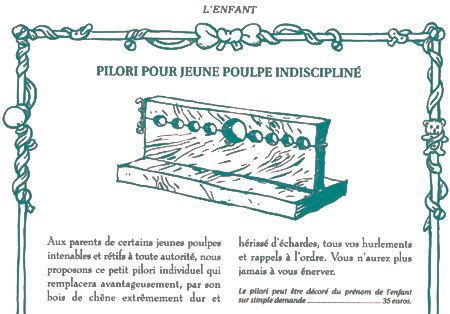
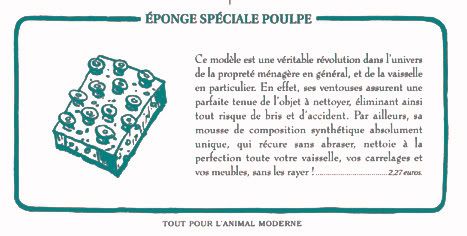
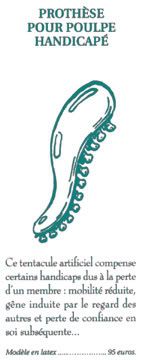
Accessoires pour poulpes
Published Saturday, October 14, 2006 by Spyder.
Chiste -Un pulpo en la cabeza-
Published Tuesday, October 10, 2006 by Spyder.
Un tipo entra en un bar con un pulpo en la cabeza y el camarero le dice: "Paco, ¿pero qué te ha ocurrido?" y el pulpo le responde "Ufff, Manolo, si te lo contara no me creerías".
Labels: Humor
Un pulpo macho a la hembra...
Published Monday, September 04, 2006 by Spyder.
¿Qué le dice un pulpo macho a un pulpo hembra?
Te doy:
Mi mano
Mi mano
Mi mano
Mi mano
Mi mano
Mi mano
Mi mano
Mi mano
Te doy:
Mi mano
Mi mano
Mi mano
Mi mano
Mi mano
Mi mano
Mi mano
Mi mano
Labels: Humor
Chiste -El pescador y el pulpo-
Published Sunday, September 03, 2006 by Spyder.
Un pescador en plena veda de pulpos, pesca uno de un tamaño inmenso.
En ese momento ve venir a la guardia costera y nervioso coge al pulpo y se lo echa por el hombro.
- ¿No sabe usted que está prohibido pescar pulpos?
El pescador mira al pulpo incrédulo y responde al policia:
-Ya le decía yo a este puñetero bicho que nadie se iba a creer el cariño que me ha tomado.
En ese momento ve venir a la guardia costera y nervioso coge al pulpo y se lo echa por el hombro.
- ¿No sabe usted que está prohibido pescar pulpos?
El pescador mira al pulpo incrédulo y responde al policia:
-Ya le decía yo a este puñetero bicho que nadie se iba a creer el cariño que me ha tomado.
Labels: Humor
Chiste -Qué le dijo el pulpo...-
Published Tuesday, July 25, 2006 by Spyder.
Qué le dijo el pulpo a la gallega...?
- ...
- ...
Labels: Humor
Un pulpo elefante
Published Saturday, April 15, 2006 by Spyder.


